
HVAC Installation in Kotzebue, AK
Tell us about the house, and a licensed contractor who covers Northwest Arctic Borough will get in touch.
Tell us about the job
It takes about a minute.

A system that has to hold heat all year
In Kotzebue, heat is not seasonal. Winter nights average -6°F from December through February, and even summer afternoons only reach 57°F, so a furnace or boiler here runs all 12 months, not just through the cold stretch. Whatever you install has to be sized for a heating load that never really breaks.
Most homes here heat with fuel oil. The area has logged 18 winter storms and 8 damaging wind events over the past ten years, and in 2024, 21% of Alaska households lost power for 24 hours or more. That is worth weighing when you pick a system, because a furnace that depends on the grid is only as reliable as the grid is.
- -6°F
- the average winter night it heats against
- 57°F
- the average summer afternoon it cools against
Alaska requires contractors to register with the state.
Registration means the business is on file with the state. Nobody tested the contractor's trade knowledge to get that number, and the state keeps no record of how the work turns out. It tells you the business exists and can be traced. It does not tell you the installer knows how to size a heat pump or set up a gas furnace correctly.
For a heating and cooling install in Northwest Arctic Borough, the protection that matters comes from the local building office, not the state. Replacing a furnace, air conditioner or heat pump needs a permit in most cities and counties, and an inspector checks the work when it is done. That inspection is what catches a bad gas connection or a system put in wrong. Where the state offers no trade exam, the permit and the inspection are what stand between this reader and a bad job.
Source: Alaska Department of Commerce, Community, and Economic Development
- When should I replace my HVAC system?
- Replace your furnace when it is breaking down more than once a season or a contractor finds the heat exchanger is cracked. Up here your furnace runs all twelve months, so it works harder than one in a place with a real off season, and that wears it down faster. If a contractor tells you a repair is getting expensive, replacing it is usually the sounder move, since the next breakdown could land on a night at -6°F. Waiting on a furnace here carries more risk than waiting on one somewhere with a mild winter to fall back on.
- Should I replace my furnace and air conditioner at the same time?
- That question does not really apply here, since homes in Kotzebue do not need cooling at all. Summer afternoons average 57°F, which is comfortable without air conditioning. Almost every home here heats with fuel oil, so what matters is the furnace and the oil system feeding it, not a paired heating and cooling swap.
- What happens during an HVAC installation?
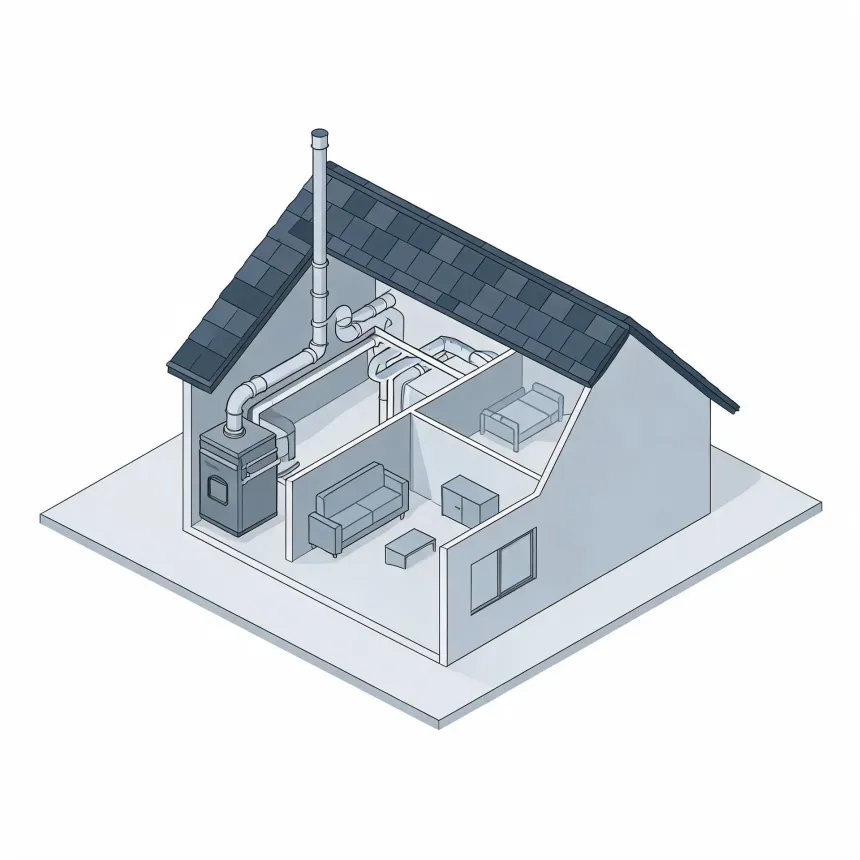
- A contractor first sizes the new furnace to your house rather than just matching the old one, since an undersized furnace will struggle through winters this cold. The old unit comes out, and the new one is set in place, connected to the ductwork or venting, and wired in. Fuel lines and combustion venting get connected and checked, since most homes here run on fuel oil. Before finishing, the contractor runs the furnace through a full heating cycle and checks that it shuts off and restarts correctly, which matters given how often storms here knock out power.