
HVAC Installation in Nome, AK
Tell us about the house, and a licensed contractor who covers Nome Census Area will get in touch.
Tell us about the job
It takes about a minute.

A heating system in Nome works every month of the year
Winter nights here average 0°F from December through February, and the heat has to keep up on every one of them. Summer afternoons only reach 56°F, so there is no real cooling season to plan around. What Nome needs is a system built to hold heat 12 months a year without a break.
Most homes here run on fuel oil, and whatever replaces or backs up that system has to handle the same cold with no summer stretch to ease the load. Add in the storms, 20 winter storms and 17 damaging wind events over the last ten years, and the power behind that heat matters as much as the furnace itself. Alaska households lost power for 24 hours or more at a high rate in 2024, and a heating system that cannot restart on its own when the power comes back leaves a house cold at the worst time.
- 0°F
- the average winter night it heats against
- 56°F
- the average summer afternoon it cools against
Alaska requires contractors to register with the state.
That registration puts the business on file with the state. Nobody tested the contractor's work to get that number, and there's no exam behind it, so it tells you the business exists and can be traced, not that the work will be done right.
For a heating and cooling installation, the protection here comes from the permit process instead. In most places, putting in a new furnace, heat pump or air conditioner needs a permit from the local building office, and the finished work gets inspected once it's done. That inspection is what checks the gas connections and the wiring, not the registration.
Source: Alaska Department of Commerce, Community, and Economic Development
- When should I replace my HVAC system?
- Replace it when repairs start coming often, or when the contractor tells you a part that's failing isn't worth fixing again. In Nome your furnace runs all year, so a system on its last legs doesn't get an off season to wait out. If yours is old and you're already calling someone out more than once a season, that's your answer.
- Should I replace my furnace and air conditioner at the same time?
- Most homes here don't have air conditioning to begin with, since summer afternoons average 56°F and cooling isn't something this climate calls for. So this really comes down to your furnace alone. Have a licensed contractor look at its condition and age before deciding anything.
- What happens during an HVAC installation?
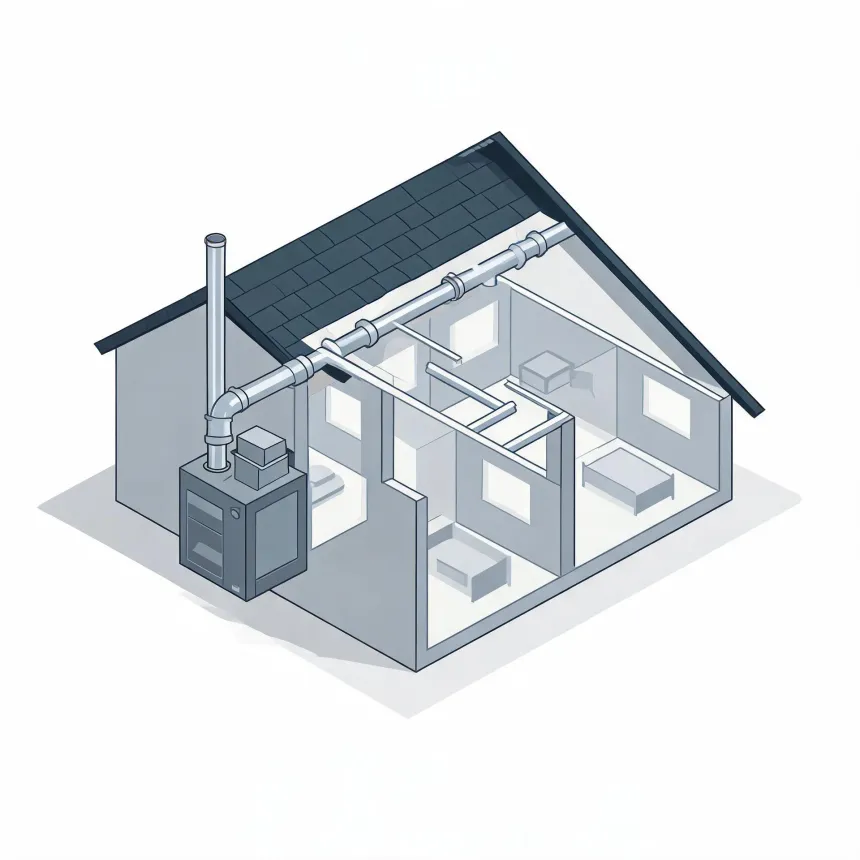
- A contractor removes the old equipment, sets the new furnace in place, and connects it to your ductwork, gas or fuel oil line, and venting. Since most homes here run on fuel oil, that line and the tank get checked as part of the job. Once it's connected, the contractor tests it and walks you through anything you need to know before winter sets in. The exact steps depend on your house, so ask the contractor doing the work to walk you through what's specific to yours.