Mini Split Installation in Fairbanks, AK
Tell us about the house, and a licensed contractor who covers Fairbanks North Star Borough will get in touch.
Tell us about the job
It takes about a minute.
Fairbanks asks a mini-split to heat, not cool
Winter nights here average -10°F from December through February. A mini-split installed in Fairbanks is going to spend its life as a heater, not an air conditioner. Homes here need heat from August through June, eleven months of the year, and cooling almost never comes into it.
At -10°F, a mini-split is working at the edge of what a heat pump can do, so the unit and the way it's sized and installed both matter. Any mini-split heat pump built after January 1, 2023 has to meet 7.5 HSPF2 for heating under the federal minimum, but that number is set for the country as a whole, not for a place where winter runs this cold and this long. Most homes here still heat with fuel oil. A mini-split installed to handle real Fairbanks winters, not just meet the federal floor, is a different job than installing one somewhere mild.
- 11 months
- August through June, your system heats
- -10°F
- the average winter night it heats against
- 70°F
- the average summer afternoon it cools against
Alaska requires contractors to register with the state.
That registration puts the business on file with the state. Nobody tested the contractor's work and there's no trade exam behind it, so the record tells you the business exists, not that it does good work.
For a mini-split installation, the permit and inspection from the local building office are what stand in for that missing exam. Most cities and boroughs require a permit before the work starts and an inspection once it's done, and that inspection is what checks the job was done right here, not the state registration.
Source: Alaska Department of Commerce, Community, and Economic Development
- Is a mini split worth it?
- In Fairbanks, that depends on what's backing it up. Cold climate mini splits keep working at low temperatures, but at -10°F and colder, most systems lean on a backup heat source to keep the house comfortable. With most homes here heating on fuel oil, a mini split can offset some of that oil use through the milder months, but nobody should plan to run on a mini split alone through a Fairbanks January. A contractor can look at your house and tell you what mix of mini split and backup heat makes sense.
- How many rooms can a mini split cover?
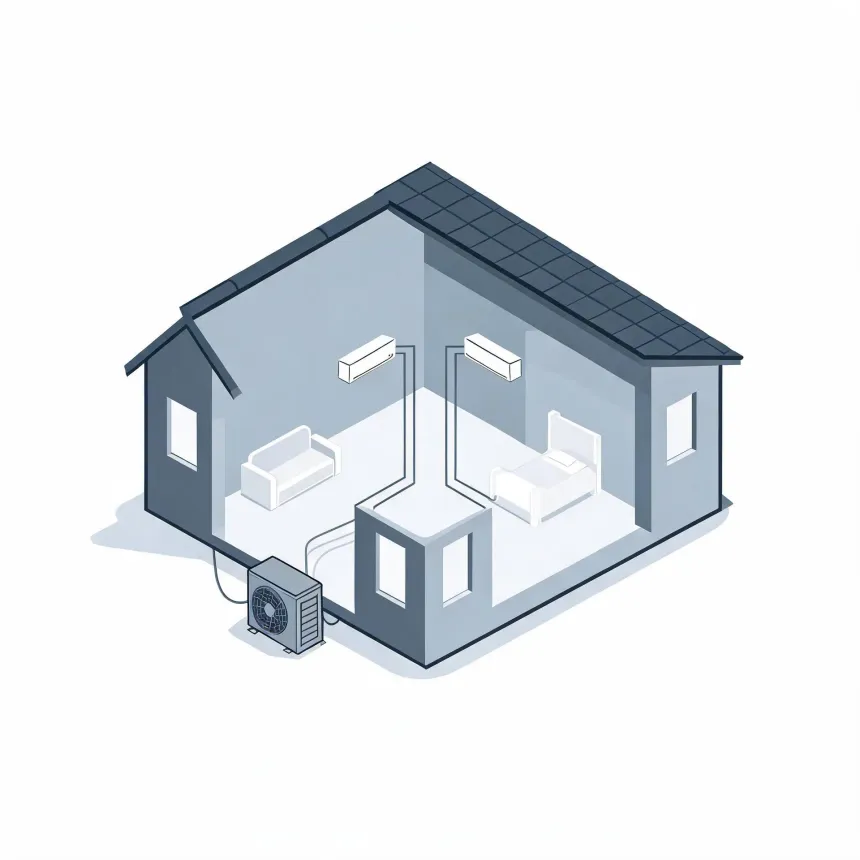
- A single outdoor unit can run one indoor head or several, depending on the system. Single-zone systems heat and cool one room or open area well. Multi-zone systems tie one outdoor unit to several indoor heads, each running on its own thermostat, so you can cover more than one room without installing a separate outdoor unit for each. How many zones a given house can support comes down to the layout and the size of the outdoor unit, which a contractor sizes room by room.
- Can a mini split heat a whole house?
- It can, if enough zones are installed to reach every room and the system is sized for how cold it gets here. Fairbanks winter nights average -10°F from December through February, so whole-house mini split heating in a climate like this usually means a cold climate model built to keep producing heat at those temperatures, often paired with backup heat for the deepest cold snaps. A contractor can size the zones and equipment to your house and tell you whether backup heat makes sense for your setup.