Mini Split Installation in Wrangell city and, AK
Tell us about the house, and a licensed contractor who covers Wrangell City and Borough will get in touch.
Tell us about the job
It takes about a minute.
Wrangell asks a mini-split to heat, not cool
Your mini-split will run every month of the year here, and almost all of that work is heat, not air conditioning. Winter nights average 30°F from December through February, and summer afternoons only reach 62°F, so the compressor spends its life pulling heat out of cold outdoor air rather than pushing heat out of a hot house.
Any mini-split installed new has to meet the federal minimum for a split-system heat pump, 7.5 HSPF2 for heating and 14.3 SEER2 for cooling, but in Wrangell the heating rating is the one that matters most. Over a fifth of Alaska households lost power for at least a day in 2024, and a mini-split does not run without electricity, so a backup plan for heat matters as much as the unit itself.
- 30°F
- the average winter night it heats against
- 62°F
- the average summer afternoon it cools against
Alaska requires contractors to register with the state.
That registration puts the business on file with the state. There's no trade exam attached to it and no license number earned by passing one. It tells you the business exists on paper. It doesn't test what the contractor knows about the work.
For a mini-split installation, most cities and counties require a permit from the local building office, with an inspection once the work is done. That inspection is what checks the job here, not the registration.
Source: Alaska Department of Commerce, Community, and Economic Development
- Is a mini split worth it?
- In Wrangell, yes, because it does the one job every home here needs for all 12 months, which is heat. Winter nights average 30°F from December through February, and a mini split keeps producing heat well below that without ductwork to install or lose heat through. Most homes here already run on electric heat, so a mini split fits right into that setup and tends to use less electricity than baseboard heaters. It also gives you cooling for the rare warm afternoon, though with summer highs only averaging 62°F, that part matters less here than the heating does.
- How many rooms can a mini split cover?
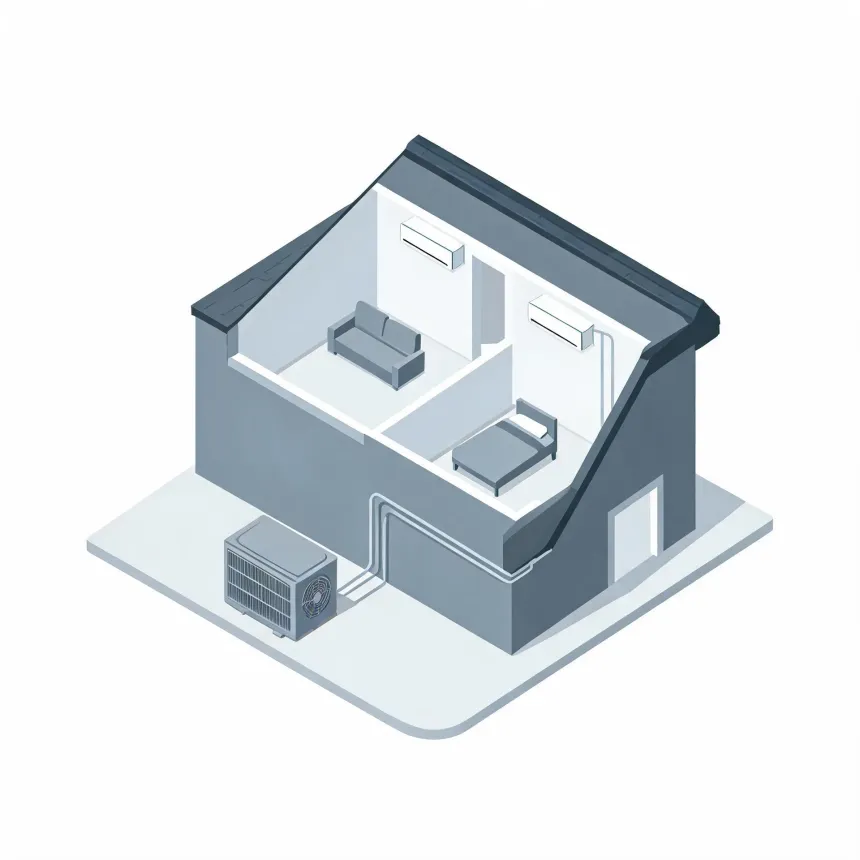
- A single indoor head heats and cools the room it's mounted in. A multi-zone system runs several heads off one outdoor unit, each one set to its own room, so how many rooms you can cover depends on the size of that outdoor unit and how much heat each room needs to make up on a 30°F Wrangell night. A contractor sizes the system once they know the layout of the house and how each room holds heat.
- Can a mini split heat a whole house?
- It can, if it's sized and placed for that. A multi-zone system with a head in each main room can carry a whole house through a Wrangell winter, since these units are built to keep producing heat well below the 30°F nights this area sees from December through February. Whether one system is enough, or whether you need a head in every room versus just the main ones, comes down to the layout of the house and how heat moves between rooms. That's something a contractor works out after seeing the place.