







A dark gray furnace with two access panels stands in a basement, connected to galvanized sheet-metal ductwork and PVC pipes, with exposed wood framing and a bare bulb light in the background.

Matched to your furnace job

How to lower your heating bill in an Alaska winter

Your furnace runs most of the year here, and with power this expensive, a few wasted therms add up fast. A gas furnace that's never been looked at tends to run longer than it needs to just to keep up. This page gets into what maintenance actually changes in your bill, and what to check first. Send the form and a contractor who works on furnaces in your area will follow up.

Find my pro

The fastest way to lower your heating bill is to get your furnace cleaned and checked before it has to run hard, night after night, for months straight. A furnace loses efficiency as dust builds up on the burners and the blower, as the flame sensor wears, as the igniter weakens. None of that shows up as a breakdown right away. It shows up as a furnace that runs longer to reach the same temperature, burning more gas to do it. In a place where that furnace is on from October clear through April, that difference compounds across the whole winter into a bill that's noticeably higher than it needs to be. Maintenance catches the dirty burner or the failing part before it costs you a full season of wasted gas, and before it fails outright on a night when you need it most. It's the one piece of this that's fully in your hands before the cold sets in.

A gray high-efficiency furnace with white PVC vent pipes stands beside sheet-metal ductwork and a water heater in an unfinished basement with concrete walls and wood framing.
A clean furnace lights on the first try, burns a steady blue flame, and shuts off once the house hits temperature.
A beige gas furnace with a metal flue pipe stands in a basement against concrete block walls, beside sheet-metal ductwork, copper and white plastic pipes, and a water heater at right.
A neglected furnace labors through a long cycle, burning more gas to push out the same heat.

How a Furnace Burns Gas

  • A furnace fires by sending gas to the burners, where a hot surface igniter lights it instead of an old standing pilot.
  • The flame sensor checks that the burners actually lit, and if it's coated in residue, it can cut gas to the burners mid-cycle.
  • The blower motor pushes heated air through the ducts, and a dirty blower wheel moves less air per minute even at full speed.
  • A clogged filter forces the blower to work harder to push the same volume of air, which drives up the gas burned per cycle.
  • The heat exchanger passes combustion heat into the air stream, and soot buildup on it slows that transfer and lengthens every cycle.
  • Thermostat cycles run shorter when the burners and blower are clean, since the house reaches temperature without the furnace running as long.

A furnace starts a cycle when the thermostat calls for heat and gas flows to the burners. A hot surface igniter lights the gas, a simpler and more reliable setup than the standing pilots older furnaces used. Once the burners light, the flame sensor has to confirm it, a thin metal rod that reads the flame and tells the control board to keep the gas valve open. If that sensor is coated with residue built up over many cycles, it can misread the flame and shut gas to the burners before the house is warm, which starts the whole cycle over.

Heat from the burners passes into the heat exchanger, a set of metal chambers that transfer that heat into the air moving through the furnace without letting combustion gases mix in. Soot on the exchanger walls slows that transfer, so the burners have to run longer to push the same heat into the house.

The blower motor pulls air across the exchanger and pushes it through the ducts. A blower wheel caked with dust moves less air per minute, even running at the same speed, and a clogged filter adds resistance the motor has to push against. Both mean the furnace burns gas longer per cycle to heat the same rooms. Clean at every stage, from igniter to blower, a furnace reaches the thermostat's setting and shuts off sooner, cycle after cycle, all winter.

A woman in a gray turtleneck sweater stands by a window looking outside at snowy ground, with a dimly lit living room containing a sofa, shelves, lamp and a lit candle behind her.
A woman in a cream cable-knit turtleneck sweater stands in a warmly lit living room with a fireplace and shelves behind her, looking out a window toward snow-covered trees and a railed deck.
A woman in a cream knit turtleneck sweater stands by a window looking out at snow, with a lit fireplace, sofa and lamp in the room behind her.
A woman in a gray knit sweater sits by a window looking out at falling snow, with a dimly lit living room containing a sectional sofa, pillows, a lamp and houseplants behind her.
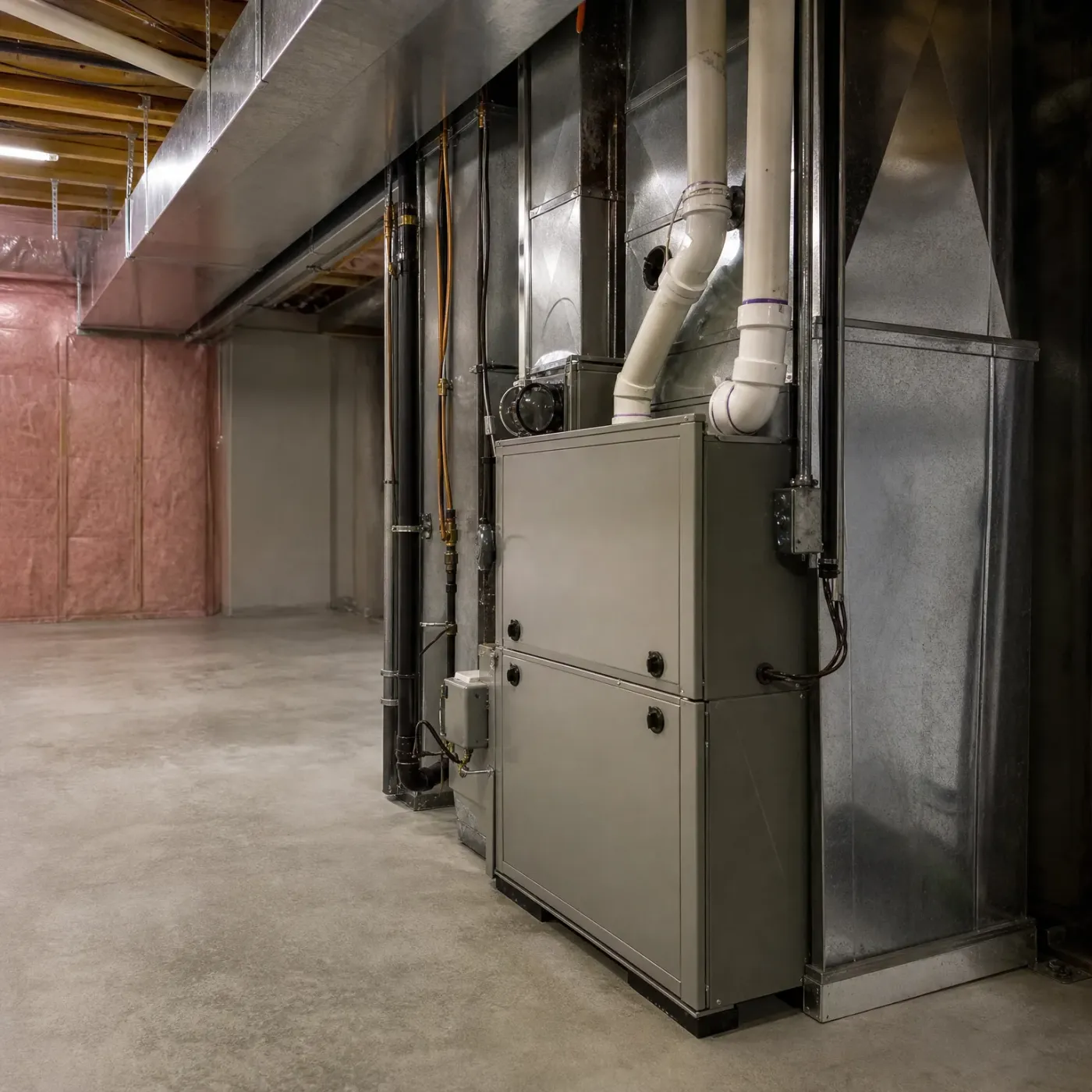
An unfinished basement with a concrete floor, pink insulation on one wall, exposed joists, galvanized sheet-metal ductwork, PVC vent pipes, and a tall gray furnace with attached gas and electrical lines.

A furnace pro near you

Send the form, and lining up the furnace tune-up stops being yours to chase.

A local pro who services furnaces gets in touch about the tune-up.

Hand it off

No fee to send it, and nothing to sign.

Why does your furnace seem to run nonstop this winter

You hear the blower kick on, run longer than it used to, and shut off only to start again a few minutes later. The air coming out of the vents feels cooler than it should, or some rooms stay cold while the one with the thermostat finally warms up. You might notice a faint burnt-dust smell when it first fires, or a yellow tinge to the flame instead of steady blue. None of that stops the furnace from heating the house. It just means the furnace is working harder to do it, burning more gas each cycle, and at Alaska power and gas rates that difference shows up on the bill before anything actually breaks.

A beige high-efficiency furnace in an unfinished basement, with white PVC vent pipes, a yellow gas line, metal ductwork, and exposed wood framing on a concrete floor.

Running clean

This is a furnace doing its job right. The ductwork and venting are tied in clean, the burners light on the first try, and the system shuts off once the house is warm. A furnace kept up like this isn't working any harder than it has to, even in January.


An older beige furnace with two louvered vent panels stands on a concrete basement floor, connected to galvanized ductwork and a metal flue pipe, with gas piping and flexible conduit on the wall behind.

Running on borrowed time

This furnace is older and has been left alone too long. The flue pipe and gas lines still work, but a unit like this is more likely to short cycle, struggle to light, or burn more gas than it should to heat the same rooms. It's the kind of furnace worth having checked before the cold sets in for good.

An older gas furnace with two louvered front panels stands on a concrete basement floor beside galvanized sheet-metal ductwork, pipes, and a weathered concrete wall.
Before you get your furnace maintenance
A gray high-efficiency furnace in a basement, connected to sheet-metal ductwork on the left and white PVC vent pipes above, with black gas and drain piping and an exposed wood-stud wall with OSB sheathing on the right.
After you get your furnace maintenance

What a dirty burner costs you

Gas burners are sized to put out a certain amount of heat for the gas they use. Dust and soot on the burner change how the flame sits, so it burns rougher and puts out less heat for the same gas. The furnace answers by running longer to reach the temperature on your thermostat. That longer run time is what shows up on the bill. Cleaning the burners doesn't add anything to the furnace, it just lets the gas already going in do the job it was built to do.

Why the blower matters too

The blower pushes heated air through your ductwork and into the rooms. If the blower wheel is caked with dust, it moves less air per minute even running at the same speed. Less air moving past the heat exchanger means the furnace has to run longer to push the same warmth into the house. A dirty filter adds to this by choking off airflow before it even reaches the blower. Checking both during maintenance is how a contractor finds the drag that's making your furnace work longer than it should.

Winter nights average 9°F statewide

At 9°F, your furnace isn't cycling off much at night. It's holding that burn for hours at a time, which is exactly when a dirty burner or a weak flame sensor shows up on your gas bill.

NOAA nClimDiv 1991-2020 county normals weighted by homes

A gray high-efficiency furnace with white PVC vent pipes stands against a concrete basement wall beside sheet-metal ductwork, a small condensate pump on the floor, and exposed wood framing at left.

What's tied into this one

This furnace sits on a clean basement floor with the flue run in white PVC and the ductwork fitted tight overhead. The condensate pump is where it should be, draining as it's supposed to, and nothing around it looks like it's been fought with.

A gray sheet-metal furnace with flue pipe and adjacent ductwork stands against a stone basement wall on a concrete floor, with white PVC and metal pipes running nearby.

What's tied into this one

Gas lines, flex tubing, and PVC condensate pipes all converge on this furnace in an older stone and block basement. Nothing here is damaged, but a mechanical room this crowded is harder to service, and harder to notice a problem in before it's already cost you.

A woman in a cream cardigan and jeans stands with one hand raised facing an open front door of a gray horizontal-siding house, with a black lantern wall light, a potted shrub with yellow flowers, and a stone-faced porch column.

A furnace that's been checked runs the way it's supposed to

The answer underneath all of this is simple. A furnace burning clean, lighting on the first try, and shutting off once the house is warm will cost you less than one running rough through an Alaska winter. Soot on a burner, a worn flame sensor, a blower pulling dirty air through the system, each of these makes your furnace work harder for the same heat, and that shows up on the bill every month from October through April.

You don't have to track down who handles this or figure out what's wrong on your own. Once you send the form, that part is off your plate. You'll be matched with a contractor who takes on your furnace specifically, the make, the age, whatever's going on with it, and they'll reach out to you directly. You've read what a clean-running furnace looks like next to a neglected one. Where yours falls between those two is worth knowing before the cold really sets in.

A living room corner with a light beige sofa holding a textured taupe cushion, a large ceramic vase of olive branches by a window, a framed neutral artwork on the wall, and a dark bowl with stacked books in the foreground.
A bearded man in a plaid flannel shirt stands in a kitchen looking out a window toward snow-covered shrubs, with a steaming mug on the windowsill and potted plants on a shelf behind him.
A smiling man with dark curly hair in a navy t-shirt sits on a gray couch indoors, with a large-leafed plant and a window in the background.

Furnace Maintenance

A local pro for your furnace maintenance

Send the request and finding a pro stops being your problem.

A black-framed smartphone standing upright against a plain white background, its screen filled with solid green.
Tune-up, service, or cleaningFurnace or heatingAlaska
Step 1 of 2

What ZIP code is the job in?







