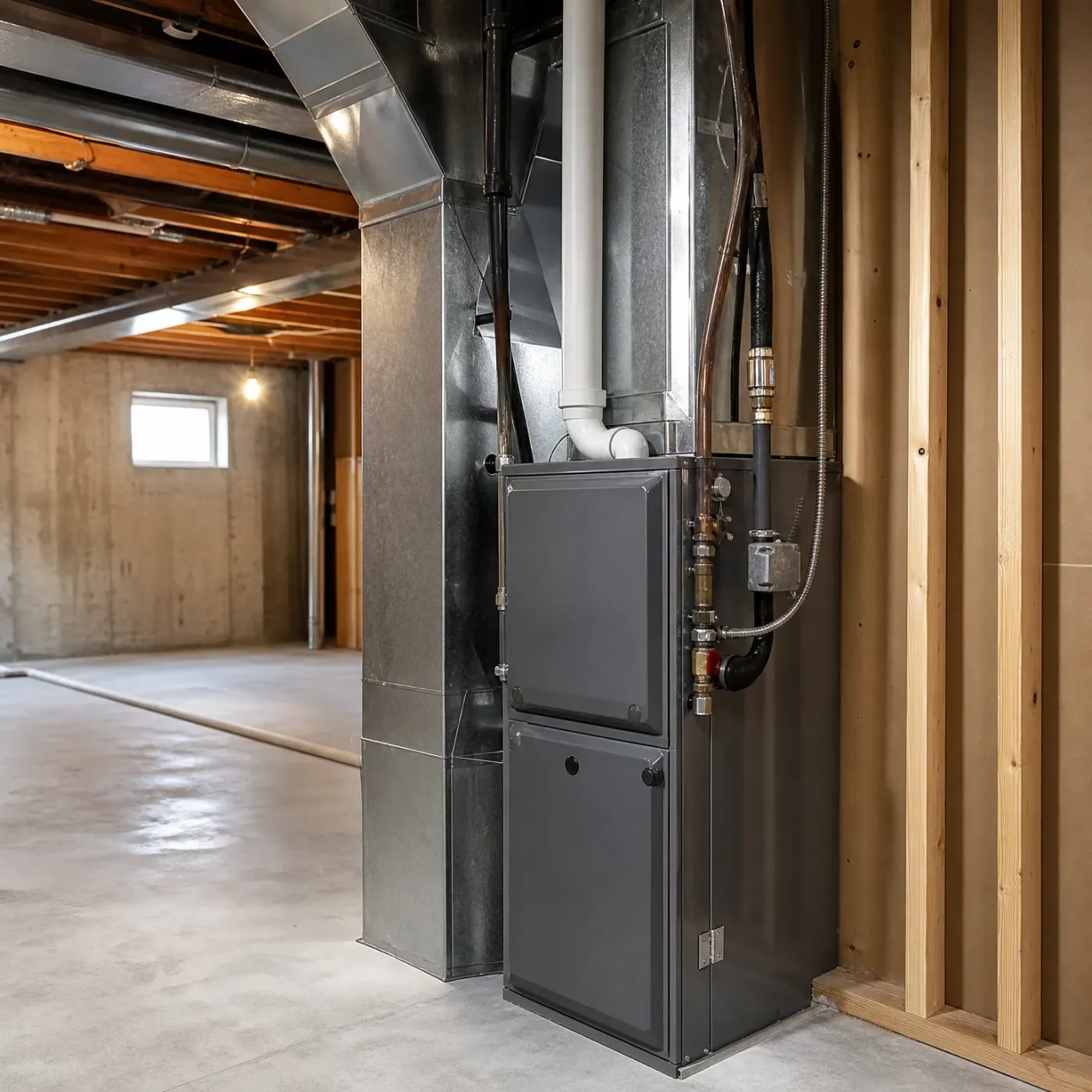
A gray high-efficiency furnace with PVC venting, copper and plastic piping, and a condensate pump sits beside sheet-metal ductwork in a concrete-floored basement.

Get your furnace to the right pro

Does closing vents save heat in an Alaska home

Closing a vent or two seems like it should cut your gas use, but it can throw your furnace's airflow off balance instead. This page covers what actually happens inside the system when you shut vents, and when it helps or hurts in a cold-climate home. If you'd rather have someone look at your furnace and airflow directly, you can get matched with a contractor who serves your area.

Get a furnace pro

Closing vents doesn't save heat. It can actually cost you more. Your furnace and the ductwork behind your walls are sized to move a set amount of air. Shut a few vents and that air has nowhere to go, so pressure builds in the ducts. Some of it leaks out through duct joints before it ever reaches a room, and the rest pushes back against the blower, making it work harder to move the same amount of heat through your house. In a lot of Alaska homes, that extra strain shows up as a furnace that cycles more often and wears down faster, not one that uses less gas. The parts that take the hit are the blower motor and the heat exchanger. If a room runs cold, the fix is usually a duct that needs balancing or insulation that's missing, not a vent that needs closing.

A gray furnace cabinet in a basement with sheet-metal ductwork, white PVC vent pipes, and black gas piping against a concrete wall and wood-framed partition on a bare concrete floor.
Vents open, air moving to every room, the furnace running the way it was set up to run.
A gray metal furnace with two white PVC vent pipes stands on a concrete floor beside galvanized sheet-metal ductwork in a basement or utility space with wood framing.
Vents closed, pressure building in the ducts, the furnace working against itself instead of your rooms.

What Happens Behind the Wall

  • A furnace blower is built to move a set amount of air across the heat exchanger every cycle it runs.
  • Close enough vents and that air backs up in the supply ducts instead of reaching a room.
  • The heat exchanger needs that airflow across it to carry heat away, or it runs hotter than it should.
  • A high limit switch senses that extra heat and can shut the furnace down mid cycle to protect it.
  • Ductwork is sealed for a certain pressure, and backed up air finds its way out through seams in a crawlspace or attic instead of your rooms.
  • Closing one or two vents in rooms you don't use isn't the same as closing enough to choke the system.

Your furnace is built around one number: how much air it needs to move across the heat exchanger every time it fires. That number doesn't change because you shut a vent in a spare room. The blower still pushes the same volume of air into the same ducts, and if the air can't get out through the registers, it has to go somewhere. Some of it backs up toward the blower. Some of it finds the seams in the ductwork and leaks into the crawlspace or the attic instead of your living room, which is the opposite of what you wanted when you closed the vent in the first place. Meanwhile the heat exchanger is counting on airflow passing over it to carry the heat away. Choke that airflow and the metal runs hotter than it's built to. The furnace has a high limit switch watching for exactly that, and if the temperature climbs too far, it shuts the burner down before the cycle finishes, even though the house hasn't reached the temperature on your thermostat yet. None of this means every closed vent is a problem. A vent or two shut in a room you don't use rarely moves the needle. It's when enough vents close at once that the ductwork can't shed the air it's built to carry, and the system starts working against the pressure instead of warming your rooms.

A gray-haired bearded man in a dark coat and scarf dusted with snow stands smiling in a dimly lit entryway with a white front door, a side table with a lit lamp, an oval mirror, and a patterned rug.
An older bearded man in a dark snow-dusted coat and gray scarf stands just inside a dimly lit home entry, with a framed picture, lit table lamp, and an adjoining room with a fireplace behind him, and snow visible through the open door.
A gray-haired, bearded man in a dark snow-dusted coat stands smiling in a dimly lit entry hall with a staircase, a lit table lamp, a framed picture, and a living room visible through a doorway.
An older man with gray hair and a beard, wearing a dark jacket dusted with snow, stands smiling in a dimly lit hallway with lamps and a living room visible behind him.
A gray furnace with copper and flexible piping stands against a wood-framed wall in an unfinished basement, connected to galvanized sheet-metal ductwork and PVC venting, with a concrete floor and exposed joists.

The right pro for this job

Fill out one form instead of calling around for a furnace tune-up.

A local pro who services furnaces gets in touch about the tune-up.

Connect with a pro

Sending the form costs nothing.

Will closing vents in an unused room hurt my furnace

Maybe there's a spare bedroom or a room you don't use much, and shutting the vent in there seems like an easy way to stop paying to heat empty space. It makes sense on the surface. But a furnace doesn't know which rooms matter to you, and the ductwork doesn't adjust itself when you close one register. What happens next depends on how many vents and how your system is built.

One closed vent usually isn't enough to cause trouble, but a few add up fast

A single vent closed in a spare room rarely overloads the system. The blower has some give built into it. But close vents in two or three rooms and the air that would have gone there has to go somewhere, so it pushes back through the ductwork instead. That makes the furnace work against its own airflow, and in a gas furnace that airflow is what keeps the heat exchanger from overheating. With power costs as high as they are in Alaska, a furnace running harder than it needs to shows up on the bill fast. If a room stays cold no matter what you do with its vent, that's worth having a contractor look at rather than guessing.

A furnace in a dim basement with a dirty pleated air filter partially pulled out of its slot, beside a water heater and concrete walls and floor.

October, late afternoon, and the light coming through the small basement window is already going grey. You're down there because the bedroom over the garage never did warm up right, and you had a thought about closing off the vent in the room nobody uses to push more heat its way. Before you touch anything you pull the filter to check it, and it slides out half gray, half caked, dust matted thick across the pleats. You stand there holding it, furnace ticking beside you, and the vent idea doesn't feel as simple anymore. Outside, the afternoon is already cooling toward the kind of night that will have this furnace running most of the dark hours ahead.

Why does that one room still run cold

You've probably noticed it already, the room past the one you closed off running colder than it used to, or the furnace cycling on more than it used to before it gets everything up to temperature. Maybe you've heard a faint whistle near a supply register, or noticed the door to the furnace closet feels warm. That's the backed-up air finding its way out somewhere it shouldn't. Left alone through a winter here, that extra strain on the blower and the heat exchanger is the kind of thing that shows up later as a repair, not a savings, and with power costs what they are in Alaska, a furnace working against itself is not where you want your money going.

A woman wrapped in a thick beige fleece blanket sits on a sofa with an open book on her lap, beside a lit table lamp, with a frost-covered window behind her.
An older woman with gray hair in a bun and glasses, wearing a beige knit sweater, smiles while looking to the side in a warmly lit kitchen, with a loaf of bread on the counter in the foreground and a snowy scene outside the window.

Winter nights average 9°F statewide

At 9°F, your furnace is pushing hard most winter nights just to hold the thermostat setting. Closing vents to save gas only adds strain the blower wasn't built to handle, right when you need every room getting its full share of heat.

NOAA nClimDiv 1991-2020 county normals weighted by homes

A beige high-efficiency furnace stands on a concrete basement floor beside sheet-metal ductwork, with white PVC vent pipes and a gas line running along an insulated wood-framed wall.

Airflow moving the way the system expects

This is a furnace running with every vent open. Air moves across the heat exchanger and out to each room the way the ductwork was sized for. Nothing backs up, nothing leaks out through a seam, and the blower isn't fighting itself.

An older metal furnace with a louvered front panel stands against a concrete basement wall, connected to sheet-metal ductwork and a flue pipe, with copper and steel pipes running alongside.

A furnace working against its own ducts

This cabinet has seen some winters. Close vents and the air that had somewhere to go now doesn't. Pressure builds behind the closed ones, some air escapes through duct seams before it ever reaches a register, and the heat exchanger runs hotter than it should.

A woman stands in the open black front door of a white-sided house with a dark shingled roof while a man in a navy jacket approaches along the walkway, with lantern wall lights, a potted shrub, and flowering garden beds nearby.

So the vents stay open

Leave them open, set the thermostat where you want it, and let the furnace run the way the ductwork was built for. That's the whole answer. The gas bill in January is going to be what it's going to be at 9°F outside, and closing off the spare room was never going to change that number in the way it seemed like it should.

What's worth your time instead is having someone look at the system itself, since a furnace that's cycling oddly or leaving one room cold might have an airflow problem that has nothing to do with which vents are open. A maintenance visit from a contractor who knows cold-climate furnaces can tell you what's actually going on, and you won't have to call around or explain the bedroom-over-the-garage story more than once.

A wooden table holding a stone vase with a bare branch, two stacked books and a small dark bowl, beside a window with green foliage outside and a sofa in the dim background.
A dimly lit unfinished basement with concrete walls and floor, exposed floor joists, a small window at left, and a dark furnace with PVC venting and sheet metal ductwork at right.

Matched to your furnace job

One form instead of hunting for a pro who does furnace tune-ups.

Tune-up, service, or cleaningFurnace or heatingAlaska
Step 1 of 2

What ZIP code is the job in?