

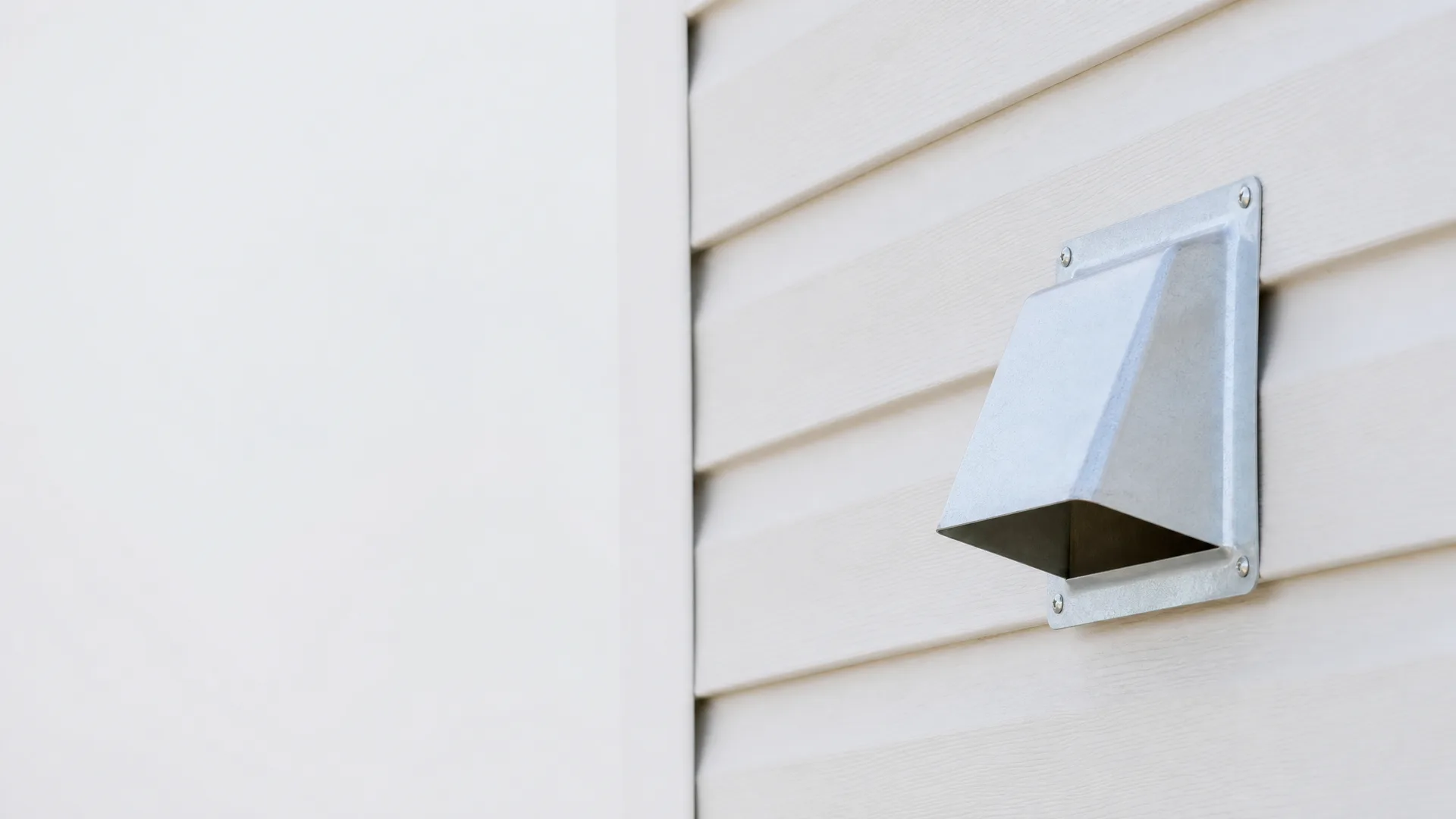
Clear vent, open flap
A vent cover like this lets the hood flap open all the way when the dryer runs. Air and moisture push straight out, so a load that would take an hour finishes on time and the drum doesn't trap heat.
A local pro who cleans dryer vents gets in touch with you.
Find my proA dryer that's hot to the touch but still leaves clothes damp almost always means the heat has nowhere to go. The vent is blocked, usually with lint packed along the hose or the outside hood, so hot air builds up inside the drum instead of carrying moisture out of the house. The drum stays warm, sometimes too warm, while the air that's supposed to pull dampness out of your clothes just isn't moving. In Alaska, dry summer air can hide the problem for a while, since clothes come out less soggy than they would in a humid climate, but once the vent is packed tight enough, no amount of heat fixes it. It's also one of the more common house fires in winter, when lint has had all season to build up. A full vent cleaning clears the line so air actually moves again, instead of just heating a drum that can't dry anything.

A vent cover like this lets the hood flap open all the way when the dryer runs. Air and moisture push straight out, so a load that would take an hour finishes on time and the drum doesn't trap heat.

When the opening looks like this, the flap barely moves. Lint caught in the mesh cuts the exhaust down to a trickle, so the dryer keeps heating a load that can't dry, and that heat has nowhere to go but back into the drum.

Lint builds up in layers along the duct wall, and each layer narrows the path air has to take. A duct that starts out four inches wide can end up passing air through an opening the size of a pencil. The motor still turns, the burner still fires, but the volume of air moving through the drum drops. Heat stays put instead of leaving with the moisture, so the drum runs hot while the clothes stay damp.
A blocked vent makes the dryer run longer to finish the same load, sometimes through two or three extra cycles. Every extra cycle pulls power the whole time, and with electric rates where they are in Alaska, that adds up faster than it would somewhere cheaper. Gas dryers burn longer too, drawing out a flame that would otherwise shut off once the load was dry. The dryer isn't more efficient when it works harder. It's just running longer to get to the same result.
At 26.11 cents per kilowatt-hour, every extra minute your dryer runs costs more here than almost anywhere else. A blocked vent forces the heating element to cycle longer to push out the same load, so that clog shows up directly on your power bill, not just in damp clothes.
EIA-861 2025 statewide residential average
Run the dryer twice for one load often enough and you've paid for a cleaning several times over, in a state where every kilowatt-hour already costs more than most of the country.
A vent cleared now is one visit. A vent left alone is a dryer that runs hotter and longer every single load until something in it gives out.




Your dryer vent cleaning request goes to one local pro.
No fee to send it, and nothing to sign.
Alaska's dry summer stretch is the easiest time to clear a vent, because the lint inside is dry too and comes loose instead of clumping. A duct that's been sitting damp through a long winter holds lint that packs tighter and takes more work to clear. Checking it in July or August means the vent goes into fall clear, right when the dryer starts running more loads from wet gear and heavier clothes. A contractor who works this equipment every season in Alaska knows that the clogs they find in August look different from the ones they find in January, and clears them accordingly.
Leave the vent packed and winter is when it catches up with you. Most homes here heat with gas, but the dryer itself still runs on electricity, and at over 26 cents a kilowatt-hour, a dryer working harder to push air through a narrow duct adds up fast on a bill that's already higher than most of the country's. A clogged vent in January also means warm, moist air has fewer places to go before it finds its way back into the house. Waiting doesn't make the lint go away. It just means clearing it later, after a longer stretch of paying for the extra minutes the dryer ran.



A dryer running hot but leaving clothes wet is telling you the air has nowhere to go. That's the vent, not the dryer itself, and clearing it is what brings the drying time back to normal.
Alaska's dry summer stretch won't last, and a vent that's been packed since last winter won't clear itself. A contractor who works on dryer vents in this state knows what a winter's worth of damp lint does to a duct run, and what tools it takes to get it out past the first few feet. Get matched with one local to you, and they'll reach out to take a look at your setup specifically.


A dryer vent pro near you