
Signs of a clogged dryer vent in Fairbanks, AK

Get my match

A dryer that runs two or three cycles to dry one load, a top that feels hot to the touch, clothes that still smell damp when the timer ends. Those are the signs you came here for, and they mean air isn't moving through the vent the way it should. In a Fairbanks winter, that matters more than it would somewhere mild. Your dryer is working against cold air outside and a vent run that may have ice or lint narrowing it down. A blocked vent makes the dryer run longer to do the same job, and it puts heat and moisture where they don't belong. You don't have to figure out whether it's lint, a crushed section of duct, or ice at the outside hood. Answer a few questions about your dryer and your home, and you'll be matched with a contractor near Fairbanks who takes it from there. They'll reach out to you directly. No more guessing about what's wrong or digging through the vent yourself to check.

A dryer takes two or three cycles to finish what should take one, the outside vent hood barely moves when you hold a hand near it, and lint turns up around the lint trap door or behind the machine. These are the signs a vent is clogged, and they show up because the lint built up inside the duct is blocking the airflow the dryer needs to push hot, wet air outside. The dryer compensates by running longer and hotter, which is why the cabinet feels warm to the touch and clothes still come out damp. In Fairbanks, where summers run hot and dry, lint also dries out fast and packs tighter in the duct, so a vent that is partly blocked can go from sluggish to fully clogged over a few loads. Left alone, the dryer keeps working harder to do the same job, and the heat has nowhere to go but back into the machine. That is the mechanical problem behind what you are noticing, and it does not clear itself.

A pile of beige, navy, and teal towels sits on top of a washer or dryer in a dim laundry room with a window and an upper cabinet.

It is past seven on a weekday evening and you are still in the laundry room. The second cycle just ended and the towels on top of the dryer are still damp, heavy in your hands when you pick one up to check. Outside it is already dark, the kind of early dark that settles over Fairbanks North Star Borough for months at a time. You start a third cycle because there is nowhere else for these towels to go tonight. The dryer ticks as it heats back up. You rest a hand on the lid for a second and pull it back. It is hot, hotter than it should be for a machine just doing its job.

Clear It Yourself or Call a Contractor

Clean the vent yourself

  • You can pull the dryer out, disconnect the duct, and vacuum out what you can reach from both ends.
  • A flexible brush kit reaches a straight run of duct fairly well if your vent doesn't bend much between the dryer and the wall.
  • It costs you nothing but your own time and whatever the brush kit runs.
  • Lint packed past an elbow or deep in a long run stays out of reach of a vacuum or a short brush.
  • If the vent hood outside is capped with a screen for the cold, you may not be able to tell from outside whether the clog is cleared.
  • A missed section means the dryer keeps running hot and taking two or three cycles, same as before.

Have it cleaned professionally

  • A contractor runs a rotary brush the full length of the duct, including bends and the run up to the roof or wall cap.
  • The job includes checking the vent hood and damper outside, which matters here where cold can stiffen or freeze the flap shut.
  • A full cleaning clears lint a homeowner's shop vacuum can't reach, especially on longer runs common in bigger houses.
  • It gets done in one visit instead of trial and error with a brush kit over a weekend.
  • A contractor can tell you if the duct itself is damaged or crushed somewhere, which a DIY cleaning won't reveal.
  • Cleaning now, rather than after years of buildup, costs less in dryer wear than running hot cycles all winter on oil-heated power bills.
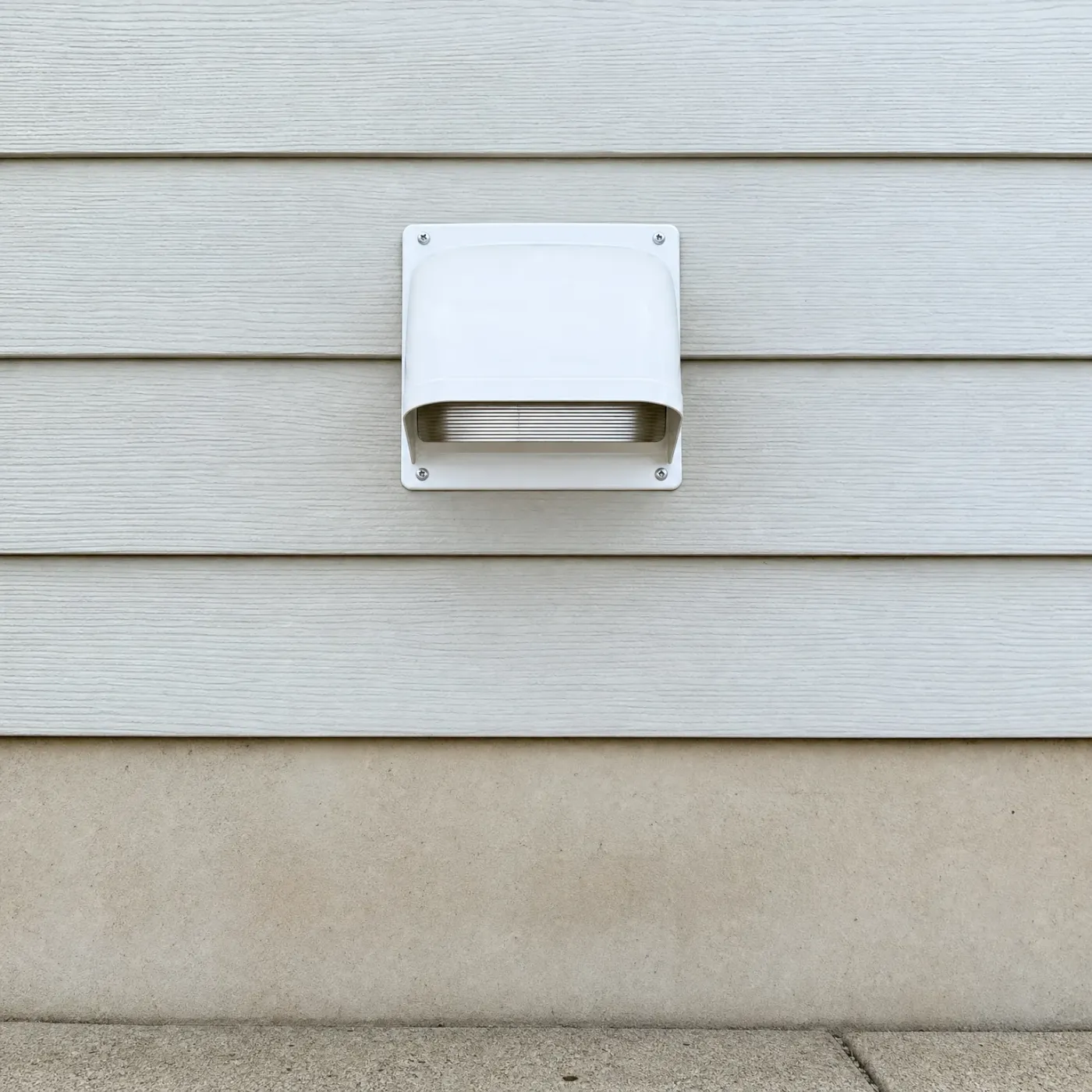
A white hooded dryer vent with a louvered opening mounted on light beige horizontal lap siding above a concrete foundation and sidewalk.

Air moving freely

Hold a hand near the hood while the dryer runs and you should feel steady air push against your palm, with the louvers swinging open. A vent in this shape clears the moist air load after load, which matters when a load of towels in a Fairbanks winter has nowhere else to dry out fast.

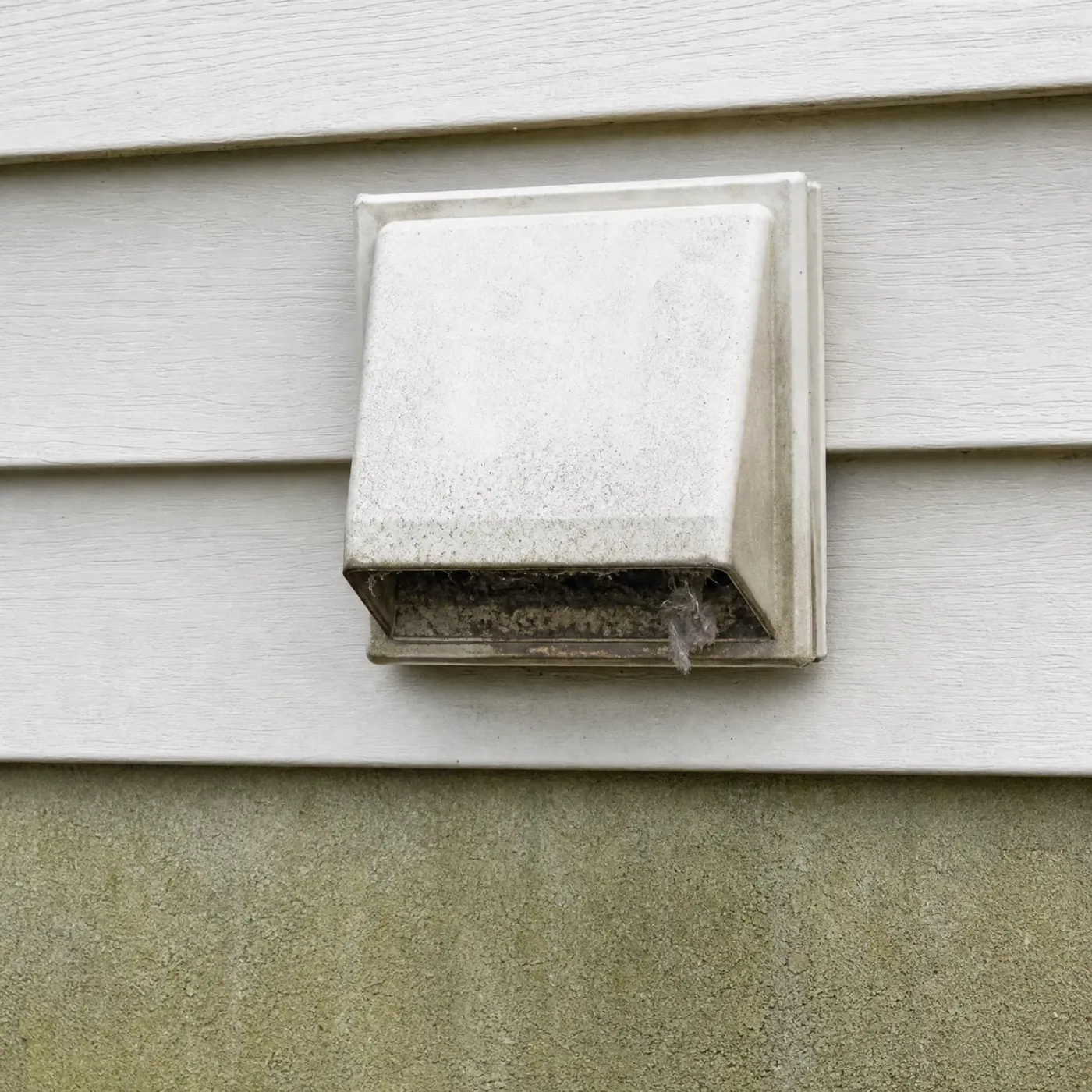
A white plastic dryer vent hood clogged with grey lint, mounted on beige horizontal lap siding above a concrete foundation wall.

Lint blocking the hood

This is what a blocked vent looks like from outside: gray lint packed across the opening, built up layer on layer until there's barely a gap left for air to pass. The louvers stay shut or barely move, and everything the dryer pushes out backs up into the duct behind it.

A gray-haired man in a dark coat dusted with snow stands in a warmly lit home entryway, with a lamp, sofa, window and white staircase banister behind him.
An older man with gray hair and a beard, wearing a dark coat dusted with snow and a blue plaid scarf, stands smiling in a dimly lit entryway with a window, framed picture, table lamp and staircase behind him.
A gray-haired, bearded man in a dark winter coat with snow on the shoulders stands in a doorway of a home interior with a lit lamp, framed pictures, a potted plant and a staircase behind him, and an evergreen wreath at the left edge.
A gray-haired man in a dark coat with snow on the shoulders and collar stands smiling in a dimly lit entryway with a paneled front door, lamps, and a framed picture in an adjoining room.
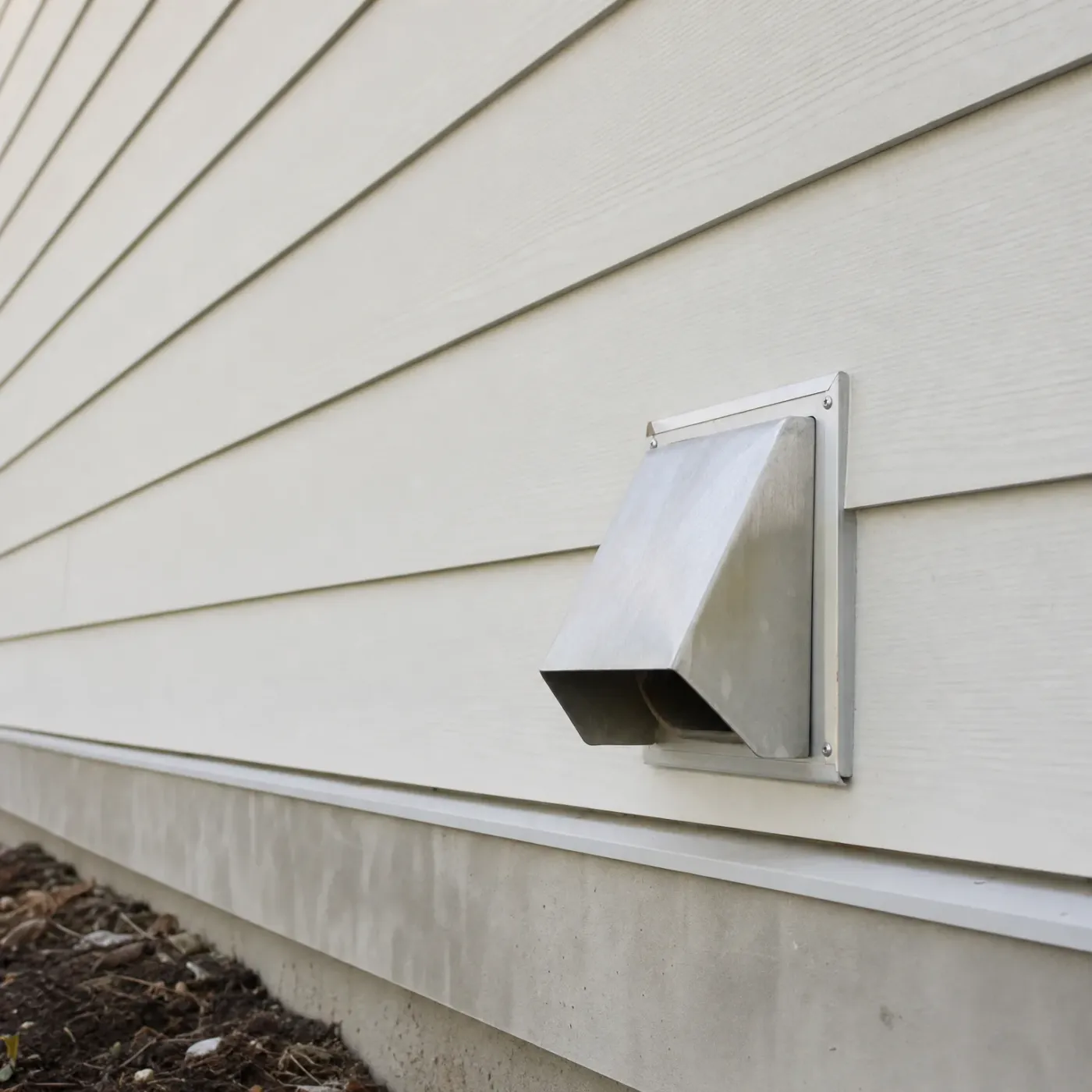
A metal hooded dryer vent mounted on cream-colored horizontal lap siding above a concrete foundation, with bare soil at the lower left.

Get matched with a dryer vent pro in Fairbanks North Star Borough

Send the form and the dryer vent cleaning stops sitting on your list.

Get matched with someone who does this kind of work in Fairbanks North Star Borough.

Request a pro

You're not committing to anything by asking.

Is your dryer trying to tell you something?

You already noticed the extra cycles and the heat coming off the top of the machine. There's more worth checking. Open the lint trap and run a finger along the screen behind it. If lint has built up past where the trap sits, air has been backing up for a while. Check the room itself. A laundry room that feels warmer or more humid than the rest of the house, or a faint burning smell when the dryer runs, means heat has nowhere to go but back inside. In a house built to hold heat through a Fairbanks winter, that moisture has nowhere to go either, and it sits in the walls around the vent run.

  1. Lint builds up on the screen and slips past it

  2. Loose lint settles and thickens inside the duct

  3. Airflow drops and hot, wet air stalls in the line

  4. The dryer runs longer and its top runs hotter

Why does a clogged vent make my dryer run hotter?

You've noticed the top of the dryer gets hot enough that you don't want to rest a hand on it for long, and you're wondering if that's normal or a sign something's wrong with the vent.

A blocked vent traps the hot air the dryer makes, with nowhere to go

A dryer works by pushing heated air through wet clothes and out through the vent, carrying the moisture with it. When lint has built up in the duct, that air can't leave fast enough. It backs up inside the drum and the cabinet instead, so the heating element keeps adding warmth to air that's already full of it. That's why the top of the machine feels hot to the touch and why a cycle that should end in fifty minutes stretches into two or three. The heating element isn't running hotter than it's built to. It's running against air that has nowhere to go, and the heat it makes stays trapped close to the machine instead of leaving with the exhaust.

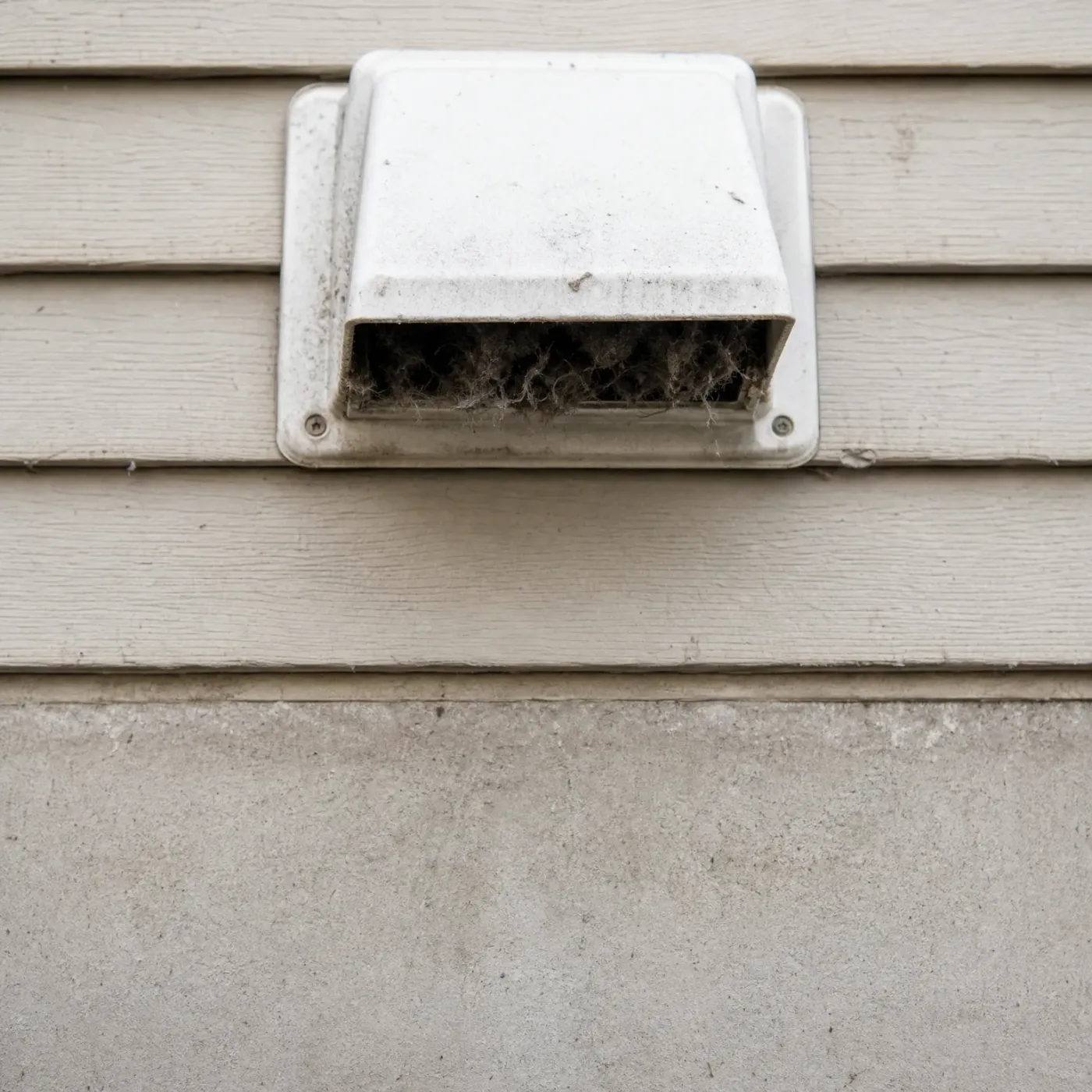
A white plastic dryer vent hood mounted on light-colored horizontal lap siding, with lint caught in its lower opening and a green-stained foundation wall below.
Before you get your dryer vent cleaning
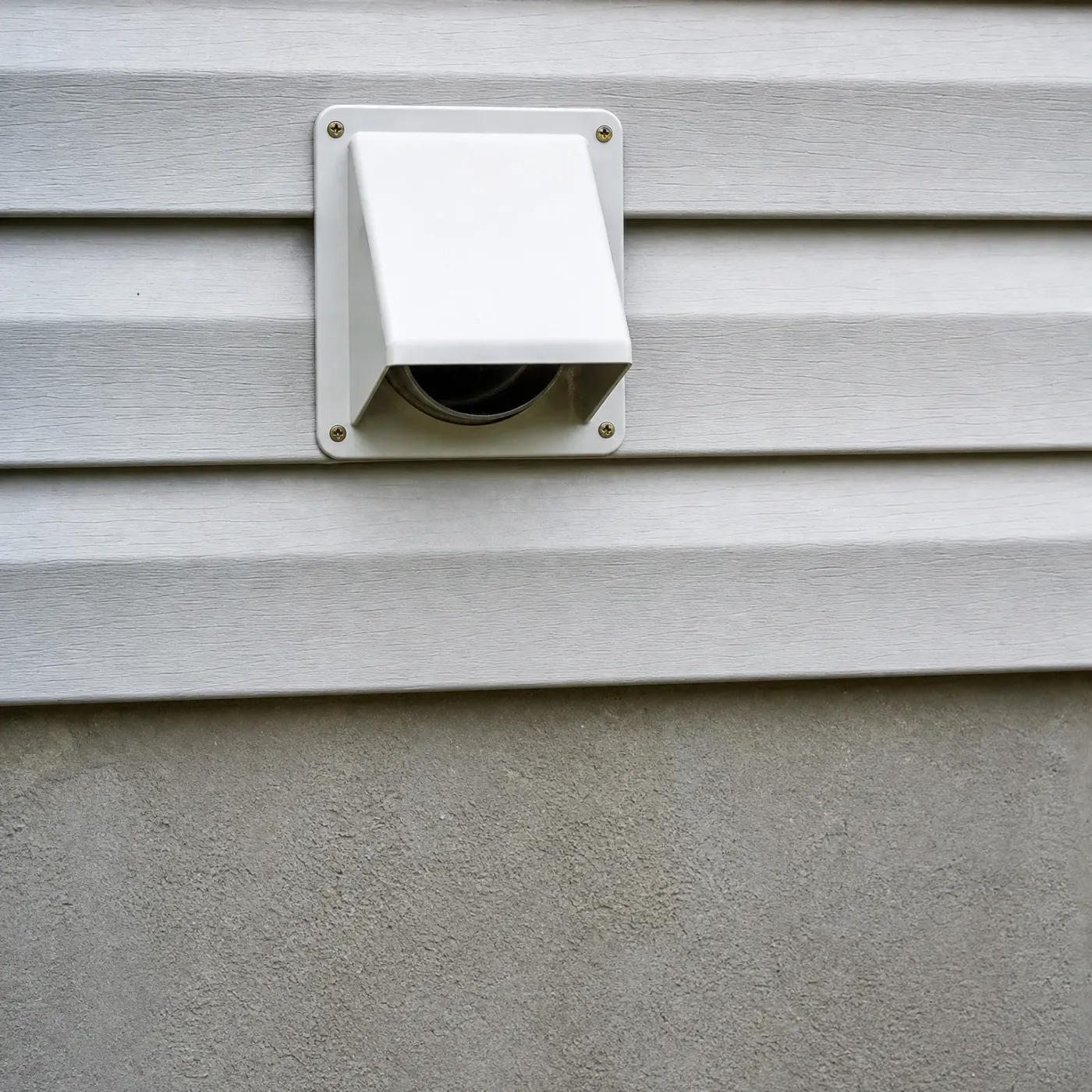
A white hooded dryer vent with a square mounting plate screwed onto light gray horizontal vinyl siding, above a gray stucco-textured lower wall.
After you get your dryer vent cleaning

2.51 people per household on average

Most houses in the borough are running a dryer for about two and a half people's worth of laundry week after week. That's enough loads that a vent half blocked with lint falls further behind each month, and the slow drying you've noticed keeps getting worse until the vent is cleared.

ACS 2020-2024

A woman in a gray sweater and jeans stands in an open wood front door of a white stucco house while a man in a dark jacket walks toward her on the entry path.

A vent that's blocked tells you, if you're paying attention

The extra cycles, the hot top, the damp towel at the end of a run, these are the dryer telling you air isn't getting out the way it should. None of these signs need special tools to notice. You already have everything you need, which is a dryer you use most weeks and a few minutes to check the hood and the trap behind the screen.

A vent in this state doesn't clear itself, and it won't stay the same either. It gets a little worse each month until the airflow a contractor would check is barely there at all. If what you've read here matches what you're seeing in your own laundry room, the next step is getting someone out to look at the actual duct run, not just the symptoms, and a borough contractor who handles this work can be matched to your house and reach out from there.

A light-colored ceramic vase holding green leafy branches sits on a round wooden table, with a wooden-framed armchair draped in a cream throw, a tripod floor lamp, and sheer curtains blurred in the background.
A metal hooded dryer vent with a louvered opening mounted on dark gray horizontal lap siding, with leafy shrub foliage in the lower left corner.

Find a dryer vent cleaning pro in Fairbanks North Star Borough

Send the request and finding a pro stops being your problem.

Duct and vent cleaningFairbanks North Star Borough, AK
Step 1 of 3

What kind of equipment?